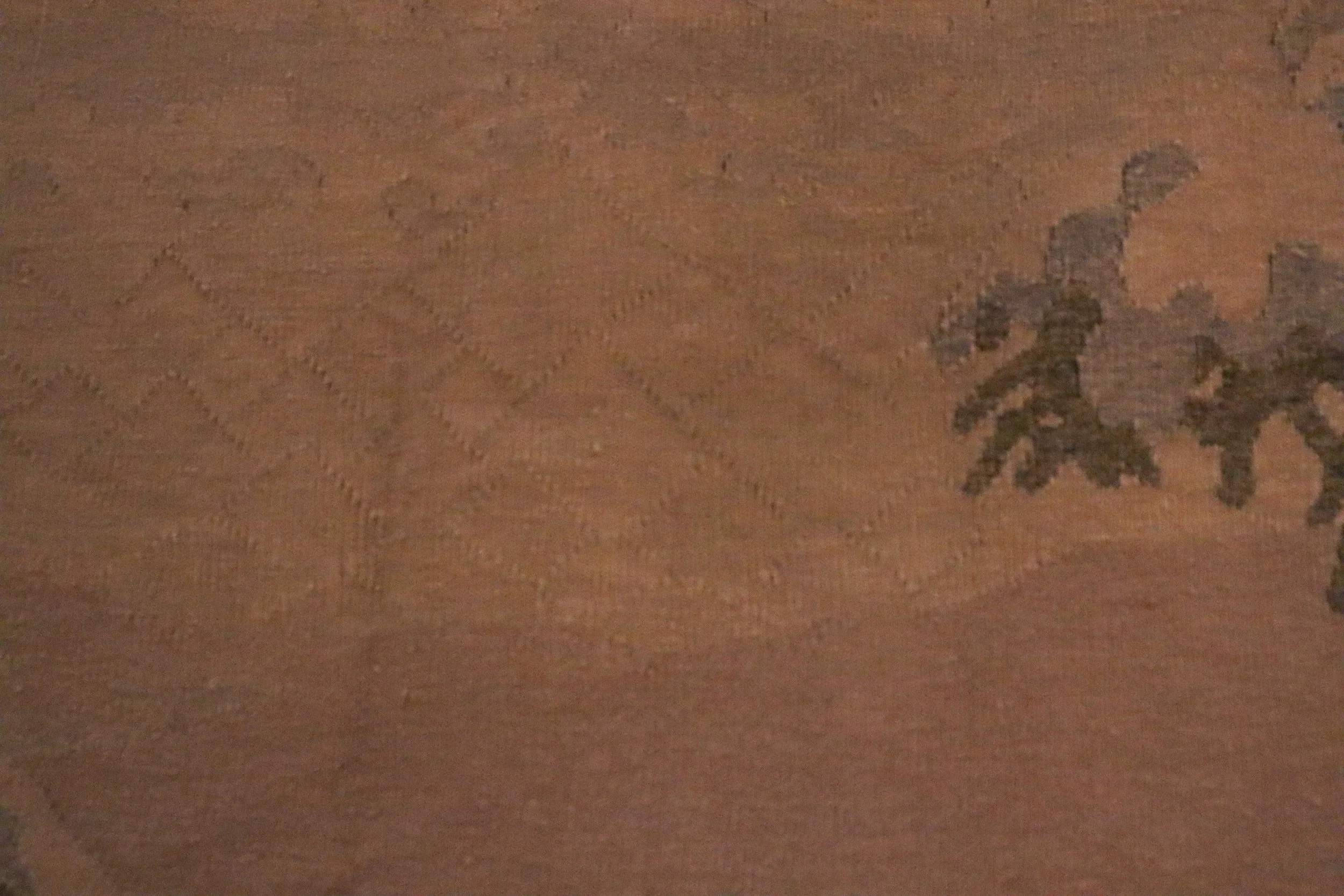
Winter Night

Winter Night
Maja Fjaestad and Gustaf Edolf Fjaestad
1915
wool tapestry
138.50 cm x 198.50 cm
Winter Count, National Gallery of Canada
Collection of Peter and Renate Nahum
No European had been able to capture the pillow-like qualities of snow quite like Gustaf Edolf Fjaestad. Born in 1868, he Swedish artist was known for his quasi-patriotic depictions of snowy northern landscapes. Part of the Konstnärsförbundet (Artist Association School), he studied at the Academy of Arts in Stockholm and worked under the likes of Carl Larsson and Bruno Liljefors. Over the course of his career, he picked up many mediums, from printmaking, to painting, and designing, with a special interest in weaving thanks to the talents of his wife, Maja Fjaestad. He would later go on to hold exhibits all over Europe.
Born in 1873 under the name Kerstin Maria Hallèn, Maja Fjaestad was a successful painter, printmaker, and textile artist. Although she was rejected from the Swedish Academy of Fine Arts due to her gender, she continued to preserver through the discrimination and continued taking private painting lessons, before being accepted into the Artist Association School, where she would find success, eventually receiving commissions for her works. She would go on to found the Rackstad art colony in Varmland with her husband, as well as a textile shop that employed female weavers, eventually turning into a full mill thanks to its success.
Although not a typical depiction of love, the tapestry is a representation of adoration across mediums. Based on a composition painted by her husband, Maja Fjaestad used her talents in weaving to create an artwork of the snowy plains of Sweden. She transformed her husband’s art in this adaptation, and in doing so, paid respects to the nature to which they dedicated their lives.