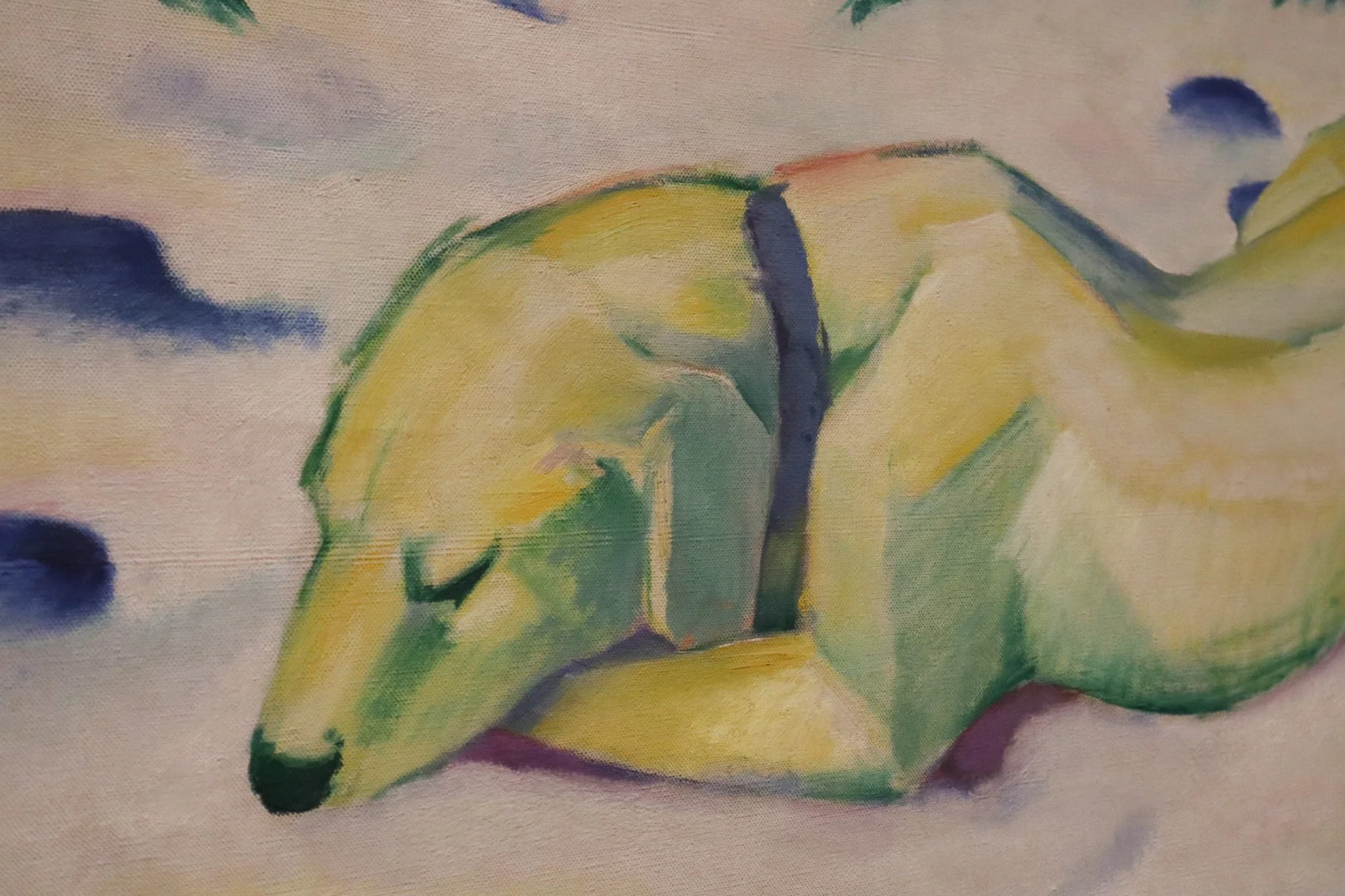
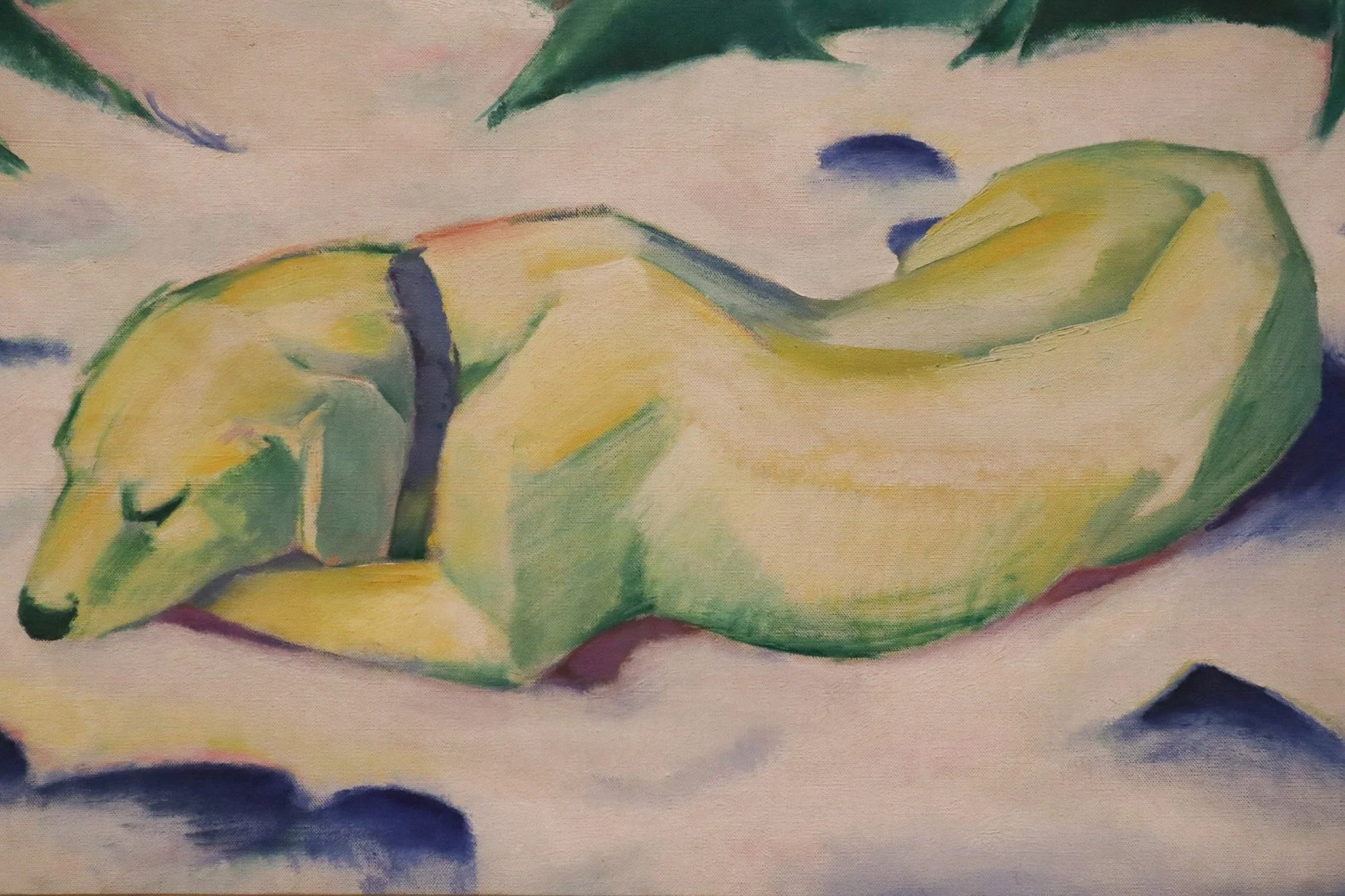
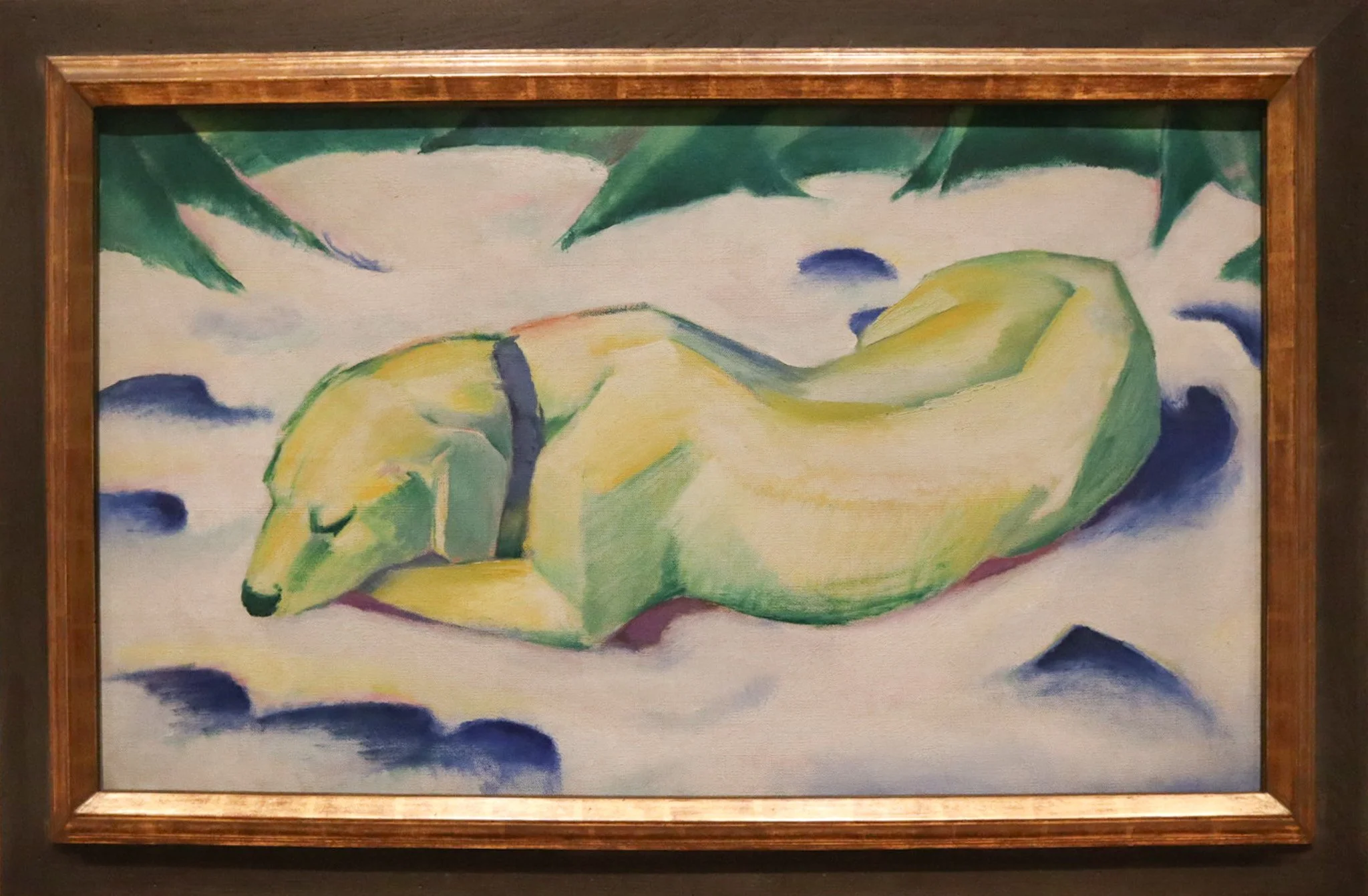
Dog Lying in the Snow
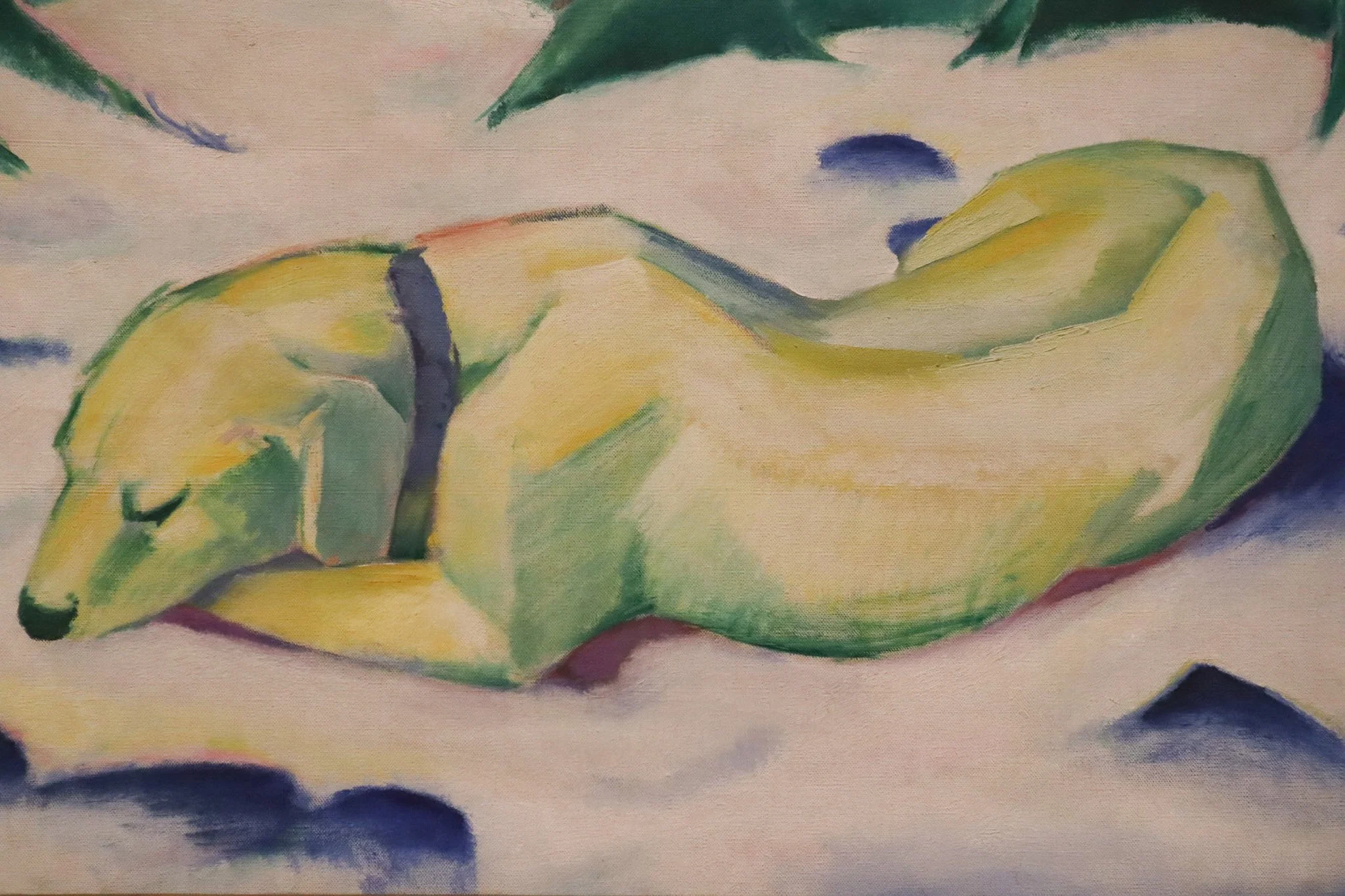
Dog Lying in the Snow
Franz Marc
c. 1911
oil on canvas
24.6 × 41.3 in (62.5 x 105 cm)
Winter Count, National Gallery of Canada
Staedel Museum, Frankfurt am Main
Born in Munich, Germany, in 1880, Franz Marc was inspired by his father from an early age to pursue a career in the arts. Despite this, he initially attempted the more traditional pursuits of philosophy and theology before ultimately abandoning them and enrolling at the Munich Academy of Fine Arts. There, he learned the techniques of Naturalism and Realism, styles he would later abandon in favor of the Expressionist approach for which he became renowned. Although he is considered a pioneer of modern art and continues to influence artists today, many of his works were removed from museums or destroyed by the Nazi Party during the Second World War.
Marc is perhaps best known for his work with Der Blaue Reiter (The Blue Rider). Founded alongside Wassily Kandinsky, Der Blaue Reiter was a group of artists united by the shared goal of fostering a deeper spiritual connection through art. Unfortunately, the movement was short-lived. Established in 1911 with an exhibition at the Moderne Galerie in Munich, it dissolved only three years later, in 1914, with the outbreak of the First World War. Nevertheless, the group had a profound impact on the art world, helping to shift artistic practice away from the depiction of objective reality and toward abstract and expressive forms of representation.
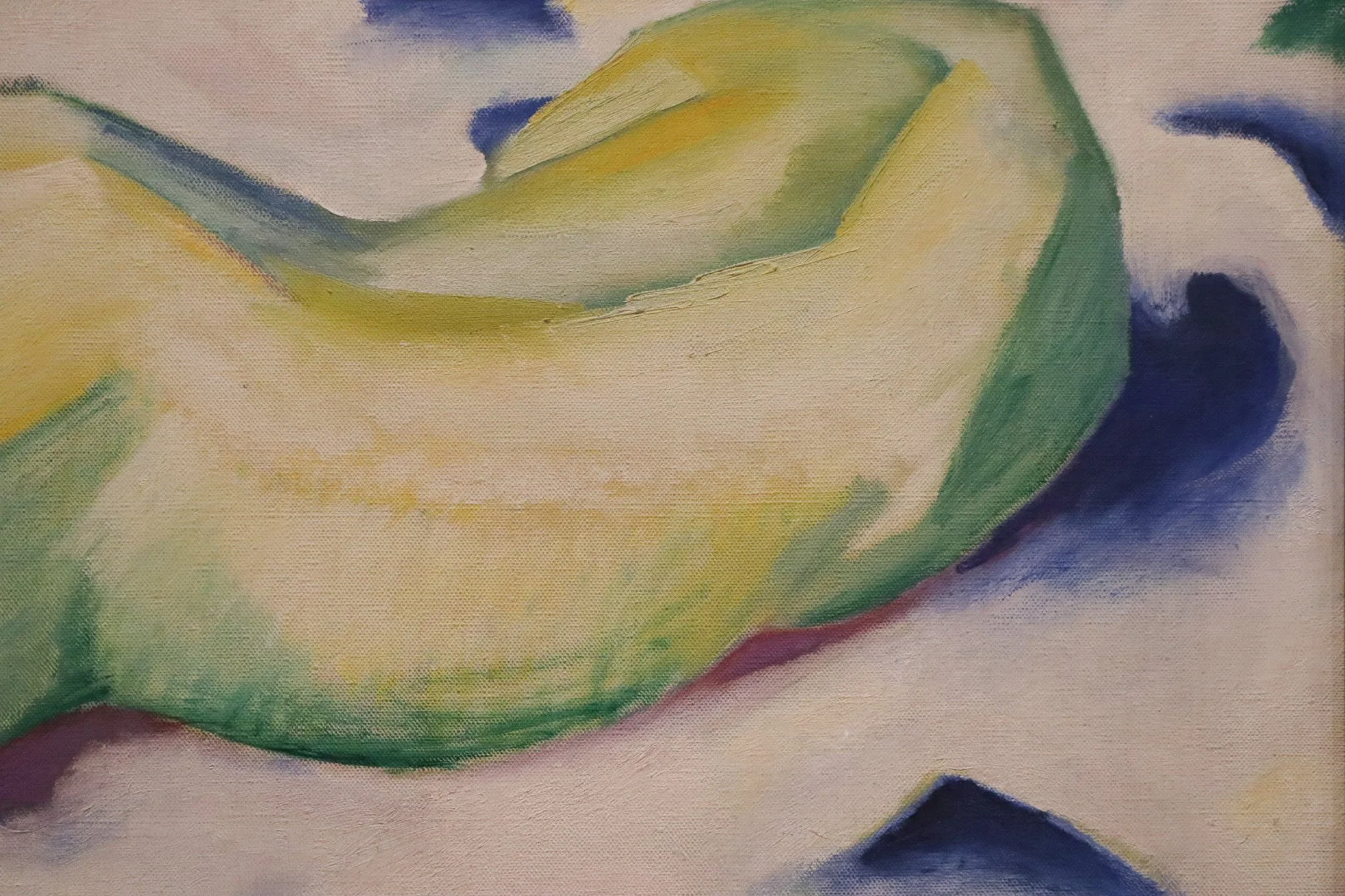
Among all his subjects, Marc most enjoyed painting animals. In this portrait, he uses an expressive and vibrant palette of colors to depict his own dog, Russi, napping in a blanket of snow. Characteristic of his style, Marc abandoned a naturalistic approach in favor of expressive color, even in his treatment of light and shadow. In doing so, he transforms a scene that might otherwise appear nearly colorless—a white shepherd sleeping against a snowy landscape—into a vibrant composition that radiates warmth and life.